In the dynamic landscape of real estate, where market fluctuations and trends dictate the course of transactions, there exists a growing concern known as the "Rate Lock Gap." This phenomenon has silently but significantly influenced the inventory dynamics in the housing market, leaving both buyers and sellers grappling with its repercussions.
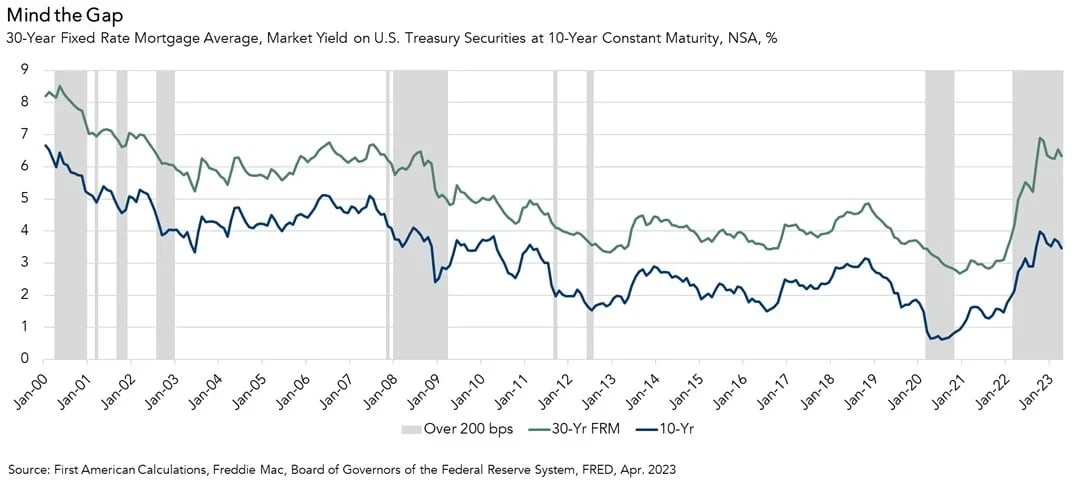
- The Rate Lock Gap is a manifestation of the discrepancy between the mortgage rates of existing homeowners and the prevailing rates in the market. As the financial landscape evolves, mortgage rates fluctuate, responding to various economic indicators and policy shifts. However, a considerable portion of homeowners who secured mortgages in the past enjoy significantly lower rates compared to the current market offerings.
At first glance, one might perceive this as a boon for homeowners, providing them with favorable lending terms and lower monthly payments. Yet, beneath this seemingly advantageous scenario lies a complex web of implications that reverberate throughout the real estate ecosystem.
One of the most palpable consequences of the Rate Lock Gap is the inhibition it imposes on inventory expansion. Homeowners with ultra-low mortgage rates find themselves tethered to their properties, disincentivized from listing their homes for sale. Why relinquish a mortgage with exceptionally favorable terms for a new one that demands a higher monthly payment?
This reluctance to sell translates into a dearth of available properties in the market, exacerbating the already-existing inventory crunch. Prospective buyers, eager to capitalize on historically low-interest rates, find themselves confronting limited options, often facing fierce competition and escalating prices for the scant listings available.
The ramifications extend beyond the immediate transactional realm, permeating into broader economic spheres. The constriction of inventory not only stifles mobility within the housing market but also impedes economic activity associated with real estate transactions. From construction and renovation to ancillary industries like furniture and home improvement, the ripple effects are palpable.
So, how can the Rate Lock Gap be bridged, and its impact mitigated?
One proposed solution involves targeted policy interventions aimed at incentivizing homeowners to transition from their existing mortgages to new ones without incurring substantial financial burdens. This may entail the introduction of refinancing mechanisms or initiatives that cushion the financial disparity between old and new mortgage rates.
Additionally, heightened awareness and education regarding the intricacies of mortgage rates and their implications can empower homeowners to make informed decisions regarding their housing choices. Financial literacy initiatives, coupled with transparent communication from lending institutions, can demystify the complexities surrounding mortgage refinancing and encourage proactive engagement from homeowners.
Furthermore, technological innovations and data-driven insights can play a pivotal role in navigating the nuances of the real estate landscape. Advanced analytics platforms can offer predictive models and market projections, empowering stakeholders to anticipate trends and adapt their strategies accordingly.
Ultimately, addressing the Rate Lock Gap necessitates a multifaceted approach that acknowledges the intricacies of the real estate ecosystem. By fostering collaboration between policymakers, industry stakeholders, and homeowners, we can chart a path towards a more equitable and vibrant housing market—one that transcends the confines of prevailing interest rates and empowers individuals to realize their homeownership aspirations.
In the labyrinthine realm of real estate, where market dynamics intersect with economic forces, the Rate Lock Gap stands as both a challenge and an opportunity—a call to action for collective ingenuity and innovation in shaping the future of housing. As we navigate the complexities of the modern housing landscape, let us forge ahead with resolve and vision, bridging the chasm between the present and the possibilities that lie beyond.