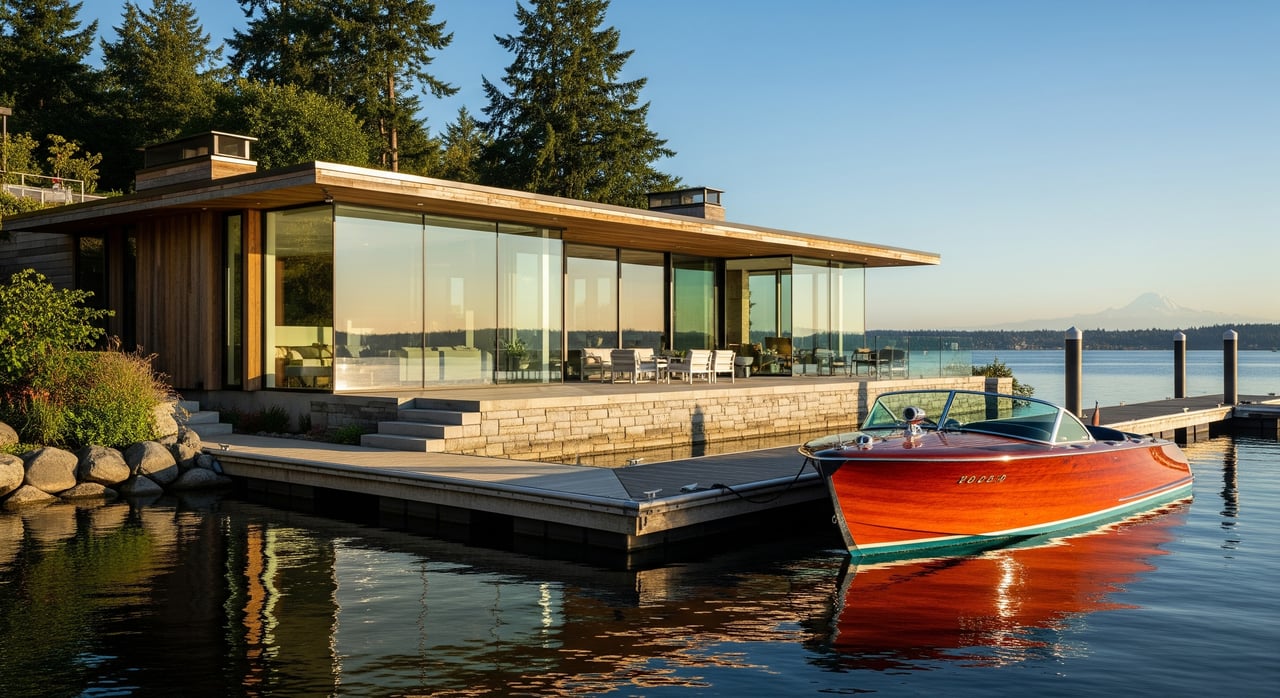
Shopping for Lake Washington waterfront and wondering where to start? The shoreline looks simple from the deck, but permits, leases, and insurance can surprise even seasoned buyers. If you want moorage that works, a shoreline that lasts, and a smooth closing, you need the right plan. In this guide, you will learn the essentials of permits, docks, bulkheads, insurance, and negotiation specific to King County’s Lake Washington. Let’s dive in.
Why rules matter on Lake Washington
Lake Washington waterfront is regulated by multiple agencies. Washington’s Shoreline Management Act requires each local jurisdiction to adopt a Shoreline Master Program. That means Seattle, Bellevue, Kirkland, Renton, Medina, and unincorporated King County each have their own standards and thresholds. What is allowed on one shoreline segment may be limited on another.
Before you tour homes, identify the property’s shoreline environment designation and the local rules that apply. Confirm whether the existing dock, lifts, or bulkhead were permitted and built to plan. Early clarity reduces surprises later and strengthens your offer.
Who regulates your shoreline
- Washington State Department of Ecology sets statewide shoreline policy and oversees local programs.
- Your city or King County applies its Shoreline Master Program through shoreline and building permits.
- Washington Department of Fish and Wildlife issues Hydraulic Project Approvals for work that affects fish and aquatic habitat.
- Washington Department of Natural Resources manages state-owned lakebed and often requires a lease or authorization for docks, floats, or mooring buoys.
- U.S. Army Corps of Engineers may regulate work below the ordinary high water mark depending on scope.
- FEMA designates flood zones, which can affect lender requirements and insurability.
When you need permits
- Substantial development under a local Shoreline Master Program often requires a shoreline permit, or a qualified exemption, for new docks, major dock changes, or bulkhead replacement.
- Any work in or over the water that can affect habitat typically requires a Hydraulic Project Approval.
- If your dock or buoy sits over state-owned lakebed, expect a DNR authorization and confirm whether it transfers at sale.
- Larger encroachments or fill in navigable waters can trigger federal review by the U.S. Army Corps of Engineers.
- If the home sits in a FEMA Special Flood Hazard Area, flood insurance may be required by your lender.
Moorage and docks 101
Lake Washington properties feature a range of moorage: fixed piers on piles, floating docks with ramps, boat lifts or hoists, and sometimes mooring buoys. Some homes rely on shared community docks governed by recorded easements or HOA rules. Dry upland storage may be present but is often limited by local rules.
Moorage is a major value driver. A well-permitted, functional dock that fits your vessel can be the difference between a lifetime home and a costly project you never planned for.
Permit and ownership checks
- Request all shoreline and building permits, as-built drawings, prior HPAs, DNR authorizations or leases, and any federal permits.
- Confirm whether any DNR authorization is current and transferable, and whether fees are owed.
- Ask for recorded easements or CC&Rs that govern community dock rights, slip assignments, and maintenance cost sharing.
- Clarify whether the dock is “grandfathered.” Older, nonconforming structures can be legal to use but may face limits if you seek changes.
Condition and usability
- Hire a marine contractor or structural engineer familiar with Lake Washington docks to inspect piles, floats, framing, fasteners, and lifts.
- Verify power supply, lighting, and lift equipment permits and condition.
- Confirm water depth and seasonal water level changes for year-round use, and check whether your boat type and length fit the existing moorage.
- Understand removal obligations. Some authorizations require you to remove structures if a lease ends.
Bulkheads and shoreline stabilization
Shorelines are stabilized with different methods. Hard armoring includes concrete or rock bulkheads and riprap. Soft or vegetative stabilization uses native plants, logs, rootwads, and beach nourishment. Hybrid solutions combine limited rock with planting.
Local Shoreline Master Programs tend to favor soft shoreline techniques to support habitat and nearshore processes. Replacing or enlarging a bulkhead often requires mitigation and careful design to meet the “no net loss” standard.
What this means for you
- Bulkheads can protect upland areas but may complicate future permits or add mitigation costs if you change them.
- Removing armor can improve habitat and aesthetics, but only when engineered to handle waves and boat wakes safely.
- If you see slope instability, erosion, or failing walls, budget for a geotechnical and shoreline engineering review.
Insurance and risk at the water
Waterfront brings unique risk and coverage needs. Some homes sit in mapped flood zones. Standard homeowner policies can limit or exclude water-related losses. Docks, lifts, and boathouses often need endorsements or separate schedules.
Work with an insurance broker who understands waterfront. Ask how prior claims, structure condition, and permit status affect coverage. Consider an umbrella policy to address higher liability exposure for guests and water access.
How insurability affects value
- Higher premiums or hard-to-place coverage can shrink the buyer pool and may show up in pricing.
- Policies that exclude docks or marine equipment reduce practical value for boaters.
- Clean documentation and well-maintained, permitted structures tend to improve insurability and negotiation confidence.
Value, pricing, and negotiation
Documentation and usability drive price. A property with a transferable DNR authorization, clear permit history, and current as-builts often commands a premium. A safe, usable slip or dock is a marketability boost, especially for boat owners.
Deferred maintenance shows up on the waterline. Failing piles, decayed floats, and aging bulkheads become negotiation points. You can ask for repairs, credits, or escrow holdbacks. If you plan future changes, factor in regulatory risk and timeline to your offer strategy.
Smart negotiation plays
- Make your offer contingent on receiving and approving permit files, authorizations, and any mitigation agreements.
- Request a marine inspection and, if needed, a geotechnical or structural review.
- If issues arise, negotiate price, credits, or seller-funded repairs. Escrow holdbacks can bridge timing for in-water work windows.
- If a community dock is involved, obtain HOA rules, slip assignment details, and maintenance reserves before waiving contingencies.
Lake Washington due diligence checklist
- Title and recorded documents
- Pull easements, CC&Rs, community dock agreements, DNR lease references, and any covenants affecting shoreline use.
- Permit history and as-builts
- Collect shoreline permits, building permits, WDFW HPAs, DNR leases, USACE documents, and mitigation plans.
- Physical inspections
- Order a marine contractor inspection for docks, floats, and lifts.
- Add a structural or geotechnical review if bulkheads or slopes show distress.
- Commission a survey to confirm property lines relative to the ordinary high water mark.
- Environmental and regulatory review
- Identify the property’s shoreline environment designation in the local SMP.
- Ask local planning staff to confirm any open violations or enforcement actions.
- Insurance review
- Get quotes for homeowner, umbrella, and flood insurance if applicable.
- Confirm coverage for docks, lifts, and moorage equipment, including storm or collision damage.
- Utilities and upland considerations
- Verify sewer or septic requirements and any shoreline-related development constraints.
- Check access easements to the shore and any limits on upland improvements.
- Closing and negotiation
- Use contingencies to confirm permits and authorizations.
- Consider escrow holdbacks for identified shoreline repairs.
- Negotiate seller remediation where needed to satisfy lenders or insurers.
Local nuances across King County
Cities around Lake Washington tailor the Shoreline Master Program to their shoreline reaches. Setbacks, dock dimensions, lifts, lighting, and materials can vary by jurisdiction and by shoreline environment designation. A design that works in one city may not pass in another.
Expect closer review for projects that extend waterward, expand moorage, or replace hard armoring. The “no net loss” principle guides decisions, so mitigation planting or design changes are common permit conditions. Plan your project scope early to match local thresholds.
Pro team for waterfront success
- Local real estate agent with Lake Washington waterfront experience
- Land use or shoreline attorney or consultant for SMP and permit strategy
- Licensed marine contractor for freshwater docks and lifts
- Structural or shoreline engineer and geotechnical consultant for bulkhead and slope stability
- Licensed surveyor to confirm ordinary high water mark and boundaries
- Insurance broker experienced with waterfront and flood coverage
- Title company familiar with DNR encumbrances and shared moorage
Work with a seasoned local advisor
Buying on Lake Washington is part real estate and part marine project management. You deserve a steady hand on both. Since 1991, Stephen has guided Seattle and Eastside clients through complex contracts, shorelines, and negotiations with a calm, detail-first approach.
If you want clear due diligence, smart offer strategy, and confident navigation of permits and moorage, connect with a local advisor who does this every day. Reach out to Stephen Snee to talk through your timeline, wishlist, and next steps.
FAQs
What permits are required to build or replace a dock on Lake Washington in King County?
- Most new docks or major changes need a shoreline permit under the local SMP, a Hydraulic Project Approval, and often a DNR authorization if the structure is over state-owned lakebed, with possible federal review depending on scope.
How do DNR leases affect private docks on Lake Washington?
- If your dock occupies state-owned lakebed, a DNR authorization or lease may be required, it may have fees and conditions, and it might not transfer automatically to a buyer without agency approval.
Are bulkheads allowed on Lake Washington waterfront in Seattle and Bellevue?
- New hard armoring is limited where feasible, replacements face review, and local SMPs often prefer soft or hybrid stabilization that meets the no net loss standard with mitigation if needed.
Do I need flood insurance for a Lake Washington home?
- If the home is in a FEMA Special Flood Hazard Area and you have a loan, flood insurance is typically required by the lender, and even outside mapped zones some owners choose coverage based on risk tolerance.
What inspections should I order for a Lake Washington waterfront purchase?
- In addition to the home inspection, order a marine contractor inspection for docks and lifts, and add structural or geotechnical review for bulkheads or slopes, plus a survey to confirm shoreline boundaries.